Meet the 2026 LEA Director Nominees
26 Oct 2026
Get to know the members who have nominated to help lead LEA into its next chapter. Explore their professional experience, contributions to LEA and aspirations for the future.
ONLINE VOTING: Opens Tuesday 27 October 2026 and closes Thursday 5 November 2026 at 4:00pm NSW|AEDT time. Please use the official voting form linked below.
CHAIR ELECT 2026 – 2028
Meet Dr Ella Masters
Dr Ella Masters is the sole nominee for LEA Chair Elect. Learn more about her work in education design, research and LEA leadership.

ACT Chapter
Dr Ella Masters
LEA has shaped my professional life. Through the ACT Chapter, the Canberra Regional Day Out and two Mayfield Projects, I have seen how the organisation connects educators, designers and researchers, and how much it can offer as our sector navigates constrained budgets, shifting policy and renewed debate about what learning environments should be and do. As Chair Elect, I would bring experience across practice, research and association leadership: leading a studio, running a small business, completing doctoral research on innovation in school design, and delivering LEA programs at chapter and Australasian level.
Read more about Ella
My focus would be strengthening the pipeline of emerging professionals, deepening the evidence base that underpins our advocacy, and ensuring every chapter, large or small, feels ownership of LEA’s direction. I would be honoured to serve the organisation that has given me so much.
Professional History
I have practised architecture in Canberra for more than two decades, and my work sits where education and design meet. As both a practising architect and an education consultant, I understand how schools teach and learn, and how that translates into the spaces that support them. I have held senior roles in local and national practices, including leading Hayball’s Canberra studio, and founded two consultancies: Howff Design and, most recently, Scaffold Design.
I work closely with schools, governments and central agencies, helping them articulate their educational vision, shape briefs and procurement, and make well-informed decisions about investment in learning environments. My project experience ranges from early childhood settings to major ACT public school projects, including Garran Primary School, Whitlam School and the Telopea Park High School Modernisation. It also includes masterplanning and strategic advisory work for independent and Catholic schools across the region.
Whether I am working with a single school community or across a whole system, my aim is the same: learning environments that genuinely serve the people who teach and learn in them.
Biography
I am an architect, researcher, education design advisor and Director of Scaffold Design. For more than twenty years I have shaped learning environments across Canberra and the region.
My PhD at the University of Melbourne asked a question at the heart of our sector: why does innovation in school design succeed in some projects and stall in others? The result has been a practical framework for engagement, procurement and policy to support school design innovation in Australia and internationally.
My work appears in Design for Education: Spaces and Tools for Learning (2024), and I will continue to write and share my research, contributing to the wider conversation about what successful school design looks like. Teaching is another way I share this work, and I enjoy bringing it to students as a guest lecturer at the University of Canberra. I am also currently working to establish a collaborative new research initiative that connects education policy, pedagogy and design.
A long-standing LEA contributor, I have served as Chair, Past Chair and Secretary of the ACT Chapter, convened the 2023 Canberra Regional Day Out, and have chaired the Mayfield Project since 2023. I am now mentoring my second cohort of emerging professionals.
INTERNATIONAL DIRECTOR 2026 – 2030
Meet the International Director Nominees
Two LEA members have nominated for the four-year International Director position, representing Australasia on the Association for Learning Environments (A4LE) International Board. Read both profiles to understand their experience and priorities before making your selection.

New South Wales Chapter
Daniel Smith
My case for the International Director role rests on something simple: I have spent nearly two decades showing up, building relationships, and doing the unglamorous work that keeps a community connected.
The role cannot be grown into from the outside. It requires a deep understanding of how our region works, credibility with the international body, and the relationships to make collaboration real rather than nominal. I have spent eighteen years earning exactly those things, and I am ready to put them to work at the international level.
In 2023 and 2024 I had the opportunity to represent Learning Environments Australasia at the Association for Learning Environments LearningSCAPES conferences. In an effort to maintain the relationships built at these conferences, I have since self-funded travel to the 2025 and 2026 LearningSCAPES conferences. I have invested my time and funds to ensure that the relationships and networks built by Deb O’Riley are seamlessly maintained as A4LE and EDmarket find their shared identity.
In 2026 I have facilitated meetings between LEA and a delegation from Vietnam, introducing this key market to LEA. In 2027 I am introducing members of the A4LE global board to local partners as they bring their international board to LEA’s Sydney conference.
Read Daniel’s full nominee statement
This role requires a candidate that can both advocate for the membership of LEA and knows the key figures at the international level. After multiple years of meeting the players, I believe I am the best person to take on this role.
A record of sustained commitment
I have attended every LEA conference since 2008, beginning in Melbourne and continuing without interruption through Darwin, Perth, Sydney, the Gold Coast, Auckland, Adelaide, Canberra, Singapore and beyond.
In 2018 I co-convened our Sydney conference, and I will do so again in 2027. That continuity matters. It means I understand how our conferences are built, what our members value, and how the region has evolved over two decades. This makes me uniquely placed to advocate for our needs while keeping a steady link to key relationships.
My commitment extends into the governance of LEA itself. I have served on the NSW Chapter Committee since 2015 and continue to do so. I was Chair Elect in 2021-2022, and Regional Chair in 2023-2024, and I remain Past Chair through 2026, ensuring a stable handover and institutional memory across successive leadership groups.
My contributions to LEA’s governance and performance include convening Regional Day Out in 2025, serving with the Sponsorship subcommittee since 2023, and currently leading the membership model review that will shape how our organisation grows into the future. This is not a résumé assembled for a single application. It is a decade-long pattern of taking on the roles that need doing, including the ones that are more work than glory.
Relationships with the international body are already built
The International Director role lives or dies on the strength of the relationship between our region and the wider A4LE. I have been cultivating that relationship for years.
I first attended an A4LE conference in Chicago in 2018, where I was also a workshop presenter, contributing our region’s thinking to the international stage rather than simply observing.
I returned to Chicago in 2023 as Regional Chair, and again to Portland in 2024 in that same capacity. Attending as Chair meant I was there not as an individual but as a representative of our members, participating in the conversations that shape how the international group and our region relate to one another.
Crucially, that involvement did not stop when my Chair term ended. In 2025 I self-funded my attendance in Phoenix, and in 2026 I am self-funding again in Seattle, specifically to maintain a consistency of relationships.
International relationships are fragile. They depend on the same faces returning year after year, on trust rebuilt in-person, and on the sense that a region’s commitment does not evaporate the moment a title changes hands. I have chosen to pay my own way to protect those connections because I believe they are that important.
Those in-person moments are backed by less visible work. I have taken part in a range of online meetings to build relationships across time zones, much of it through the careful curation of Deb O’Riley, and I have made a point of being a steady, reliable presence in that dialogue. Relationships of this kind are maintained in the quieter spaces between conferences, and I have shown up in both.
A smooth transition from Deb’s work
One of the most important reasons I am the right person is continuity. Deb O’Riley has done extraordinary work building and holding our region’s international relationships, and the single greatest risk in any transition is that this hard-won trust is lost in the handover.
Because I have been working alongside these relationships for years, and because in Seattle in 2026 I will co-present a workshop with Deb to showcase the great work coming out of our region, I am uniquely positioned to ensure a smooth transition.
For our international colleagues, I am not an unknown quantity. I am a familiar face who has already been introduced, already been trusted, and has already been in the room. Appointing me protects the investment Deb has made and allows our region to carry it forward without a damaging break.
Why this matters beyond titles
LEA exists to bring educators and designers together to shape the future of learning environments, and that work ultimately serves young people and their communities.
The International Director role is not an honorific. It is the mechanism by which our region’s ideas reach the world and the world’s best thinking reaches us. Done well, it means the learning spaces our members design are informed by the strongest global practice, and the innovations emerging from Australia & NZ are heard internationally rather than developed in isolation.
I have the record, the relationships and the reasons to do this role well. Eighteen years of conference attendance, a decade of governance, a presenter and Chair-level presence at A4LE gatherings, self-funded commitment to relationship continuity, and a direct working partnership with Deb to ensure a seamless handover: these are facts already on the record, not aspirations.
I am asking to continue work I have already been doing, now with the mandate to do it on behalf of us all. I would be honoured to serve as International Director.
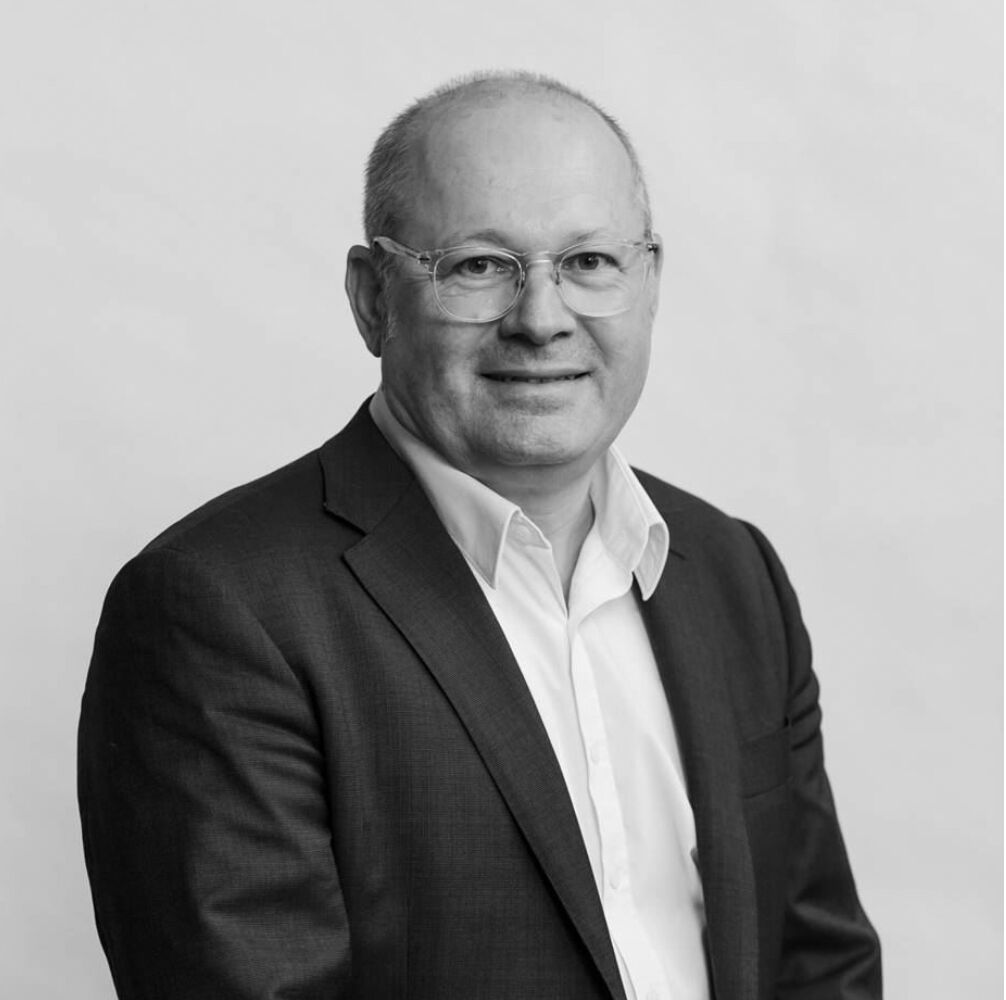
South Australia Chapter
Marino Rossi
Through my personal involvement and observation on the evolution of LEA over the last 28 years, I have been privileged to witness the growth of a fledgling organisation into a highly sophisticated operation that supports a diverse community of educators and designers.
However, in the last few years, it has become evident that the world is exponentially developing along a new trajectory that challenges all of our preconceived notions around humanity, emotions, intelligence, skills, and indeed, survival or relevance for many people across the globe.
The impact of these geo-political forces are creating a profound effect on the very substance of education and indeed the processes of learning that will struggle to remain relevant over incredibly short time spans.
It is clear to me that an international lens is essential to grasp the challenges ahead. Having had experience in developing the global strategy between A4LE and LEA in the past, I believe a global mindset is critical to ensure LEA remains at the forefront of the continuing national discourse around the worth, value and competitiveness of education in Australia. Whilst a design professional, I have a keen interest in the discourse around education policy both nationally and internationally.
Read Marino’s full nominee statement
As an Architect, I am conversant with concepts around ‘responsive spaces’ and the ability of spaces to expand and contract to provide affordances to learning opportunities.
To design to these opportunities, we must all understand the drivers that encourage deep learning and what skills we actually seek for young generations.
The deindustrialisation of education, the advent of STEM/STEAM, the promotion of soft skills, the advent of outdoor engagement and other forces of change have driven very specific responses or reactions in terms of education facility design. New forces of change are on the international frontier, including advocacy of wellbeing, inclusion and the behemoth of Artificial Intelligence.
As LEA International Director, I believe the task is to engage in this evolving narrative in a meaningful and informed manner so the full global resources of the A4LE | Edmarket network can be shared with our Australasian network.
My personal interests in the role include developing traction with Europe and in particular, a concerted drive to re-engage with the UK, which of course has provided a significant historical contribution to education systems in the Western world.
Much like A4LE has partnered with Edmarket, I also have an interest in developing partnerships; from understanding the international movement towards Multi-School Organisations (MSOs) as seen in England and New York City, to international partnerships with research institutions and think tanks.
Understanding the forces of change is fundamental to how schools and places of learning are created and designed to adapt.
It is my desire to assist in collecting this message from international discourse and ensuring LEA has a voice to contribute and share in the global debate.
